Tuesday, 27 July 2010

...And why is this important?

Yesterday, I posted information about the Mid-Winter Gathering for Friends for Lesbian, Gay, Bisexual, Transgender, and Queer Concerns, as well as information on "What is FLGBTQC?"

Why is this important?  A couple of reasons: 

1) If you are a person of faith who is questioning your sexual orientation, your gender identify, or both, it is important to understand that you do not have to give up your relationship with God (or the Goddess) when you come out.

I have come to realize over the last 20+ years that I was truly lucky, and truly blessed, when I came out. First, it never occurred to me to give up my faith because I am bisexual or or a lesbian; second, I came out into a community of faith.

When I realized I love other women, I never thought to choose between my relationship with God and being who I truly am: coming out deepened and enriched my spiritual life.

I also knew other lesbian and bi women, as well as gay and bi men, who were involved in Christian, Jewish, and Pagan spiritual communities. What's more, within a year, my Jewish (now former) partner found for me a lesbian, gay, and bisexual Christian faith community where I felt at home almost immediately, and where I later served in leadership.

This was not how the story went back then for all, or even most, lesbian, gay, bisexual, transgender, or queer folks when they came out.   

Even today, one of the biggest struggles LGBTQ people of faith face when coming to terms with their sexual orientation, their gender identity, or both, is the notion that accepting who they are means giving up God. 

This is simply not true. What's more, it's cruel.

There are a lot of LGBTQ spiritual and religious organizations. Off the top of my head, I know about, or can find, Christian, Jewish, Pagan, and interfaith organizations; and I also know how to use my Google Superpowers (thanks, Peterson, for introducing me to that term!) to find other kinds:

  • Christianity: There are a number of organizations within Christian denominations that are specific to LGBTQ inclusion and equality; there are individual churches, and networks of churches, within Christian denominations that are "welcoming," "open and affirming," etc. (the language varies) of LGBTQ people; there are Christian churches and denominations are that are primarily LGBTQ-welcoming but open to all.
  • Judaism: There are Jewish LGBTQ organizations, synagogues, and shuls, within different kinds of Judaism.
  • Paganism: There are Pagan LGBTQ organizations, circles, covens, groves, etc., within Pagan umbrella organizations and within different Pagan traditions.  
  • Islam: I'm afraid I don't know much about the Muslim LGBTQ movement, but I do know there is one.  I welcome input from readers who are involved or have friends who are involved.

There's no way I can provide an exhaustive list of resources, but they are findable with the use of the aforementioned Google Superpowers. And folks are certainly welcome to add info in the comments on the resources you've personally found the most useful.

My specialty areas are Quakerism, Paganism (particularly, Feminist Witchcraft), and to some extent Feminist Judaism, so the resources I've listed so far on my website are primarily Quaker and Pagan.  As always, if there are resources I've missed that you'd particularly like to see me list, please do let me know.

2) FLGBTQC is open to everyone.

FLGBTQC is open to all Friends. There is no "card check" at the door. You can't necessarily tell who fits which particular labels. A number of folks don't fit any of those labels. And some folks are even straight. 

These are some of the things I love about FLGBTQC.

Yes, it's definitely LGBTQ space.  And there's room for all Friends.

And, come to think of it, you don't technically have to be a Quaker to be part of the FLGBTQC community. You just have to come to our events and, well, participate in our community.

And we do have pretty awesome Meetings for Worship with Attention to Business.  

I had an interesting conversation with a Friend recently.  We've both served as treasurers of Quaker organizations, and I was bemoaning how hard it is to make numbers line up in nice, neat rows at the end of a fiscal year, even when they've behaved well all year.  Ze responded by saying, rather airily, that ze hadn't found it that difficult, even when ze was treasurer of zir Yearly Meeting.  "Well, I'll be sure to bring your name to the attention of FLGBTQC's Nominating Committee for treasurer next cycle!" I laughed.  Ze got very serious.  Oh, no, ze wouldn't be at all appropriate, being straight, ze said.  "Whyever not?"  I asked.  Because ze wouldn't be a good representative of the organization, ze feared, being straight and all.  "Does that mean our clerks who've been in opposite-gender legal marriages haven't been 'good representatives of the organization'?" I asked, honestly curious.  Oh, no, ze replied, I'm sure they've been excellent representatives of the organization.  I was kind of left scratching my head. (It turned out ze was trying to respect what ze thought was separate space.)

In all actuality, it's the not-part-of-the-FLGBTQC-community part that would be the barrier, not the straight part.  I don't think I communicated the no-card-check-at-the-door, you-can't-make-assumptions part, very well.  I hope I'm doing that better right now.

3) Equality for LGBTQ people isn't here yet, folks. It's not even here for all LGBTQ Friends.

I know it's tempting to focus on equality in civil marriage as the be-all and end-all of LGBTQ equality.  I know it's really, really tempting to say, "We have a minute in our Meeting supporting same-sex marriage, so in our Meeting, LGBTQ people have full equality," or, "We marry same-gender couples in our Meeting, so in our Meeting, discrimination's not an issue."  Or, "There is a [lesbian, gay man, trans person] in a position of leadership in our Meeting, so LGBTQ folks know they're welcome here." 

Did African-Americans achieve full equality when every African-American person became able to marry legally and religiously?  (We'll leave aside for now the question of whether or not that's really true in 2011 America.)  Has racism in the United States ended with an African-American President of the United States?  Put that way, it seems obvious that homophobia and heterosexism won't end when same-gender couples can marry legally and religiously, or with LGBTQ persons in civil or religious leadership positions.

But about your Meeting: 

  • Are lesbian, gay, bisexual, transgender, and queer persons represented proportionately in your Meeting's positions of leadership?  On your committees?  
  • Do couples who make long-term commitments and get married do so in the Meeting?  Do individuals, couples, and other families who raise children raise them in the Meeting?
  • If your Meeting is in a state where same-sex couples cannot marry legally, and couples go to states with civil marriage, do you coordinate with other Meetings so their civil marriage is under Friends' care?  Do you witness to the discrimination same-gender couples face in civil marriage?  
  • When newcomers who are lesbian, gay, bi, queer, or trans come to the Meeting, do they stay, or do they wander off?  
  • Does your Meeting have a statement of welcome on its website (if you have one) and in its entryway for LGBTQ folks and for people of color, and is your Meeting accessible to people with mobility limitations and by public transit?  
  • If your Monthly Meeting is part of a Yearly Meeting where there is conflict around the welcome or full equality of LGBTQ persons, and your Monthly Meeting is in unity about lifting up the equality of all people, then it is particularly important that you have a statement of welcome on your website (if you have one) and in your entryway for lesbians, gay men, bisexual people, and transgender people.  Language in the minute and epistle from the Central Committee of Friends General Conference in 2004, available here, may be helpful for you.  

Did African-Americans achieve full equality in our Meetings when slavery ended?  We are learning, thanks to the tireless work (okay, the sometimes exhausted work) of Friends like Vanessa Julye and Donna McDaniel, authors of Fit for Freedom, Not for Friendship: Quakers, African Americans, and the Myth of Racial Justice, that the Quaker narrative about the testimony of equality and how we walk our talk -- or the testimony of integrity -- don't always go hand-in-hand.  That's an uncomfortable truth, and it's uphill work. 

Being welcoming to lesbian, gay, bisexual, transgender, and queer people is part of being welcoming to people of color, people with disabilities (obvious and "hidden" ones, as well), and people of different ethnicities, ages, genders, races, kinds of families, kinds of theaologies within Quakerism, traditions with Quakerism, and more.

It's part of the spiritual hospitality that makes for robust Meetings, deep and centered worship, and robust Quakerism.

Okay, you ask, what if my Meeting doesn't have a marriage minute?  What if we honestly don't welcome LGBTQ folks openly and fully?  What if we wish we did, but we're just not in unity, and we're not going to pretend otherwise? 

Be honest about that.  You may be pleasantly surprised by the gifts the Spirit brings you.

Monday, 26 July 2010

RantWoman and The RSoF: Tending Ministries of Blogging

I can tell this blog post by RantWoman is going to prompt all sorts of interesting thoughts and questions for me about blogging and writing and leadings and ministry once it's had the chance to rattle around my brain a bit.  I think any number of folks I know who blog or write in other ways as part of their ministry, whether Quaker, Pagan, Unitarian Universalist, Jewish, something different, some combination, might find some useful things to chew on in this.

RantWoman and The RSoF: Tending Ministries of Blogging

Sunday, 25 July 2010

What is FLGBTQC?

What is Friends for Lesbian, Gay, Bisexual, Transgender, and Queer Concerns?

Friends for Lesbian, Gay, Bisexual, Transgender, and Queer Concerns is a Quaker faith community within the Religious Society of Friends. FLGBTQC deeply honors, affirms, and upholds that of God in all people.

We seek to know that of God within ourselves and others. We seek to express God's truth in the Quaker and in the lesbian/gay/bisexual/transsexual/transgender communities, as it is made known to us.

It is our hope to offer an oasis to those who have been spurned by the world at large. We are learning that radical inclusion and radical love bring further light to Quaker testimony and life. Our experience with oppression in our own lives leads us to seek ways to bring our witness to bear in the struggles of other oppressed peoples.

We gather twice a year, at our Mid-Winter gathering and at the Friends General Conference Annual Gathering of Friends in the summer. At these times we worship together, discern our corporate witness through Meeting for Worship with attention to business, share our individual journeys, celebrate our lives, heal old wounds, and draw sustenance from the Spirit for our work and life in the world. After almost thirty years, we are still learning to spread love in the face of rejection and hostility and to embrace new friends. We have found faith and voice to speak truth to power and the courage to be open to new revelation.

(adapted from a minute approved 15 Second Month 1999)

For more information about FLGBTQC, Quakers, where to find us, how to get involved, etc, click here: http://flgbtqc.quaker.org/whatis.html.

FLGBTQC 2011 Mid-Winter Gathering

Reclaiming the Past
Proclaiming the Future

Friends for Lesbian, Gay, Bisexual, Transgender, and Queer Concerns

Join us at the Summit (Brown's Summit, NC)
http://tiny.cc/1mvsc
Newly Remodeled!

February 18-21, 2011

for

Mid-Winter Gathering

Need more info?
(MidWinter2011@gmail.com)

Tuesday, 13 July 2010

A small rant on the theist/non-theist continuum

Below is an email I recently wrote as part of a larger thread on the Non-Theist Friends email list. There are a couple of reasons why I'm sharing it here.

The big one is that I'm tired of people ranting at me without actually being in conversation/community with me or the other people they're ranting about.

I've heard a bunch of random comments and outright rants over the last few months from people who just can't understand and just can't support the presence of non-theists in the Society of Friends. These statements, when I've asked these folks, have been based on what they think a non-theist Friend is, and have not been based on conversation with non-theist Friends or on the real, lived experience of non-theist Friends.

On both the Non-Theist Friends email list and in real life -- including the interest group I facilitated at FGC Gathering -- I've heard and read a bunch of rants implying anyone who's either a mystic or not a complete a-theist isn't rational and can't be a scientist. Paired with that have been comments and rants about Pagans' (and Christians') (I hear a Dar Williams song now...) irrational belief in the supernatural. This one often has me scratching my head; but you'll read what I have to say about nature and the supernatural and science and the supernatural in a moment (if you keep reading), so I won't rant in advance of my rant.

Another reason I'm sharing what I wrote in this email is because I don't talk very frequently about what I actually believe; about why I identify as a Pagan; or about why I identify along the non-theist continuum, much less how I'm too theist to fit in with many non-theists, and too non-theist to fit in with most theists. What's more, I just facilitated an interest group where I was rather insistent that we talk about our own experience -- not just about what happens in our Meetings or about the dynamics in our communities when we talk about our own experiences.

So, here it is.

(Please remember this email is taken out of context, and refers back to an email thread not presented here.)

-----------------------------------

I've just returned from FGC Gathering, and I'm sure I'll have more to share once I've had the chance to ponder what's been written so far and let it simmer in my brain for a bit, like a good stew. But I did want to say that for me, there are a couple of important things in here:

a) There's a big difference between the either/or of theism/atheism, and a *continuum* of theism/non-theism.

When I hang out with people who believe in a creator god who is all-knowing and all-powerful, or with people who toss reason out the window and are satisfied with the explanation "It's God's will / because God said so," it's pretty obvious to me I'm not a theist. When I hang out with people who have no room in their lives for anything science can't prove yet, or with hard atheists, it's obvious I'm not an atheist.

Put another way: if there are only theists and atheists, and if non-theist is a polite way of saying atheist [as someone asserted earlier], then I guess I don't exist. *laughing*

(And the babelfish disappeared in a puff of logic, a la Douglas Adams.)

b) Science and mysticism or spirituality are not by definition incompatible. I'm trained as a scientist. If you can't conceive of what science doesn't know yet, you literally can't *do* science; you can't use scientific method for scientific inquiry if you can't imagine things that don't yet make sense. Many things that have seemed supernatural in the past make sense now thanks to science. Many things that we don't understand now are simply things science can't explain yet. What's more, many of the scientists I know are deeply mystical people -- and some are deeply religious. So to say science and religion are incompatible is factually untrue. It may be your or my opinion; but that doesn't make it a fact.

b1) There are no controlled, randomized, double-blind studies, and there are no well-designed scientific experiments, that prove that any specific spiritual practices (such as prayer, meditation, or magic) "work" or "don't work." [Someone had earlier asserted, forcefully, that prayer doesn't work.] What little research there is doesn't, or can't, define clearly what "work" means, or completely isolate every variable (such as who is affected). There *is* some interesting research that demonstrates certain things, such as brain changes during meditation. But anyone who claims science proves spiritual practices do or don't work is factually incorrect.

c) There's more than one way to conceptualize the Divine / God / Deity / That-Which-Is-Sacred. To insist on conceptualizing it only in certain ways, and to insist on reacting against or defining one's self against only those conceptions, is to give those conceptions primacy and power.

Some non-theists may choose to reject religious and spiritual language completely because for them it's completely tainted by one conception of Deity. Some of us choose to use it in ways that for us are true, accurate, and have integrity.

I can say, with perfect truth and integrity, that the Earth is the Goddess to me. This doesn't mean, remotely, that I subscribe to a belief in an all-powerful creator deity, or that I'm ascribing such characteristics to the Earth. It means that I name the Earth, exactly as it is, to be Divine.

d) This also means that being somewhere along the theist/non-theist continuum, or being outright theist, does not automatically mean ascribing supernatural powers to one's Deity. My Deity is *nature*. You can't get ANY LESS supernatural than that. The Sun doesn't do anything supernatural. Neither does the Earth. Nor do the Stars, the Air, the Water, human beings, my cats, or the danged squirrels who have eaten their way into our car's engine. To say, as Witches do, "Thou art Goddess. Thou art God," is to say that the Divine is right here, in this world, is this world, is you and me.

Compared to some folks, this makes me a theist. Compared to others, it makes me an atheist. To me, it's a pretty meaningless distinction, b/c that concept of Deity is not one that has meaning for me to believe in or not believe in. I don't BELIEVE in a Deity -- I don't believe in the Earth, or the Air I breathe, or the Sun above, or the Water I drink, or the food I eat, or the cats I cuddle, or the rain that falls, or the rocks I carry in my pockets. I EXPERIENCE them.

Blessed be,
Stasa

Friday, 2 July 2010

Fund-raising for travel in the ministry

Dear F/friends,

As I've mentioned before, there are several trips I feel led or called to take this summer which I do not have the financial means to do myself. For health reasons, Beloved Wife and I were not able to go to the FGC Couple Enrichment Leader Training; we were sad to miss it, but glad we stayed home recovering and taking good care of ourselves and each other. I did go to the Pacific Northwest Quaker Women's Theology Conference, and am definitely glad I went! I am still raising money to meet my costs for that trip. Tomorrow we leave for FGC Gathering, where I am serving in several ways; I have done well with financial assistance and work-grants for Gathering. Right after we get back, I leave for North Pacific Yearly Meeting Annual Sessions, and I need to fund-raise for that.

Here are the details:

Pacific NW Quaker Women's Theology Conference:

Costs:
  • Registration: $250
  • Plane ticket + fees: $423
  • Misc food & ground transportation: $75.88 (does not include brownies)
  • Total: $748.88
Raised so far -- thank you!:
  • Scholarship: $250
  • Gifts: $266
  • Total: $516
Still needed: $232.88.

North Pacific Yearly Meeting Annual Sessions:

Costs:
  • Registration: $236
  • Plane fare: $524.80
  • Misc food & ground transportation: ??
  • Total: $760.80 + a little more
Raised so far (thank you!):
  • $500 total combined from Monthly Meeting and Yearly Meeting
Still needed: $260.80 - $300.00.

Please click here for information on how to make gifts to my ministry.

Sometimes it's very hard for me to ask for financial support to travel in ministry. It helps to remind myself, in the words of FLGBTQC's co-clerk, that it's ministry given through me. Then I worry less about the personalities involved, and am reassured that it's not whether it's my ministry, and it's not whether what I do speaks to people, it's whether I listen well and discern how I'm called, and it's whether I'm faithful.

Thank you for your support, for holding me in your spiritual care, and for your financial help.

Yours in Friendship,
Blessed be,
Stasa

Voices of Pagan Pacifism

Thanks to Jason Pitzl-Waters for the tip. - sm

Voices of Pagan Pacifism

Thank you for your interest in participating in the Voices of Pagan Pacifism project!

We hope this website will become an archive of helpful resources, inspiring stories and challenging essays available to the Pagan pacifist community, as well as the larger community of Pagans, Witches, Druids, Heathens and others interested in pre-Christian and earth-centered spirituality. It’s important to know that we are not alone, and to showcase the work and lives of our fellow peace-makers and social activists!

We conceive of this project as providing a showcase and permanent archive for the many voices of Pagan peace-making in the modern world. For this reason, we gladly accept submissions that have already been published elsewhere, provided they are submitted by (or with prior permission from) the original author and are accompanied by appropriate references and credit to the original publication source (including a link, if available). We also welcome new and original work never published before, by aspiring and previously-published writers alike!

We are currently accepting submissions for work in three main categories:

In all submissions (excepting the interview application form), we are interested in writing with a clear vision and a unique voice, with a minimum of grammatical and spelling errors and suitably credible research sources (when appropriate).

Submissions should be sent either as an attached file (in one of the following formats: .txt, .rtf or .pdf) or in the body of the email itself, along with the name of the writer, a short bio, and any relevant links to online sources or previous places of publication. (If you submit a piece on behalf of someone else, please include their contact information so that we can confirm permission to use their work.)

Submissions can be mailed to: submissions [at] paganpacifism [dot] com Please indicate which category/subcategory you think is appropriate for your work in the subject line of your email. See below for details on each of the categories.


I think this sounds really interesting, and I look forward to seeing what comes of it.

I believe this is of especial interest to Pagan Quakers and Quaker Pagans.

Feel free to let me know if you get involved, and what your experience is like!

Wednesday, 23 June 2010

The meaning of 'madrase'

from http://cpt.org/cptnet/2010/06/19/palestine-reflection-meaning-%E2%80%9Cmadrase%E2%80%9D

CPTnet
19 June 2010
PALESTINE REFLECTION: The meaning of “Madrase”

by Sam Nichols


Returning to the U.S. from my stint in Palestine this time, I was pulled aside to a small room, where I was initially the only white person. There was a group of Arab men, a group of people from Southeast Asia, and later on some Eastern European women came in. After a while a Lt. Spiekerman told me I was going to be asked some questions.


I was asked where I had been and what I was doing. “Israel and the Palestinian territories doing volunteer work and Egypt for tourism, blah blah blah.” Pretty standard questions, which I have become accustomed to because of Israeli security officials, but he asked me six to eight times if I attended any madrassas during my travels. Follow up questions consisted of, "did you receive any additional training or education, did you learn how to use arms, receive any...uh training...you know what I mean, did you attend any madrassas."


I asked a clarifying question. “By madrassas, do you mean madrase, which is the Arabic word for school? Are you asking if I attended a school or enrolled in an institute or higher education? If that's the question then the answer is no, I did not.”


Unfortunately, the guy didn't clarify his terms, but just kept asking about flipping madrassas.


A small linguistic lesson: There is really only one all-inclusive word for school or learning institute in Arabic, and it's madrase, or the plural, madaares. It's the word written on the exterior of elementary schools, secondary schools, etc. Madrassa is just a bad English transliteration of madrase. The word has been utterly co-opted by Western politicians, media, and neoconservatives to mean a radical Islamic, anti-western, pro-terrorism institute of Islamic indoctrination and Islamic brainwashing. That's clearly what this guy was asking me about. I don't think he was asking me if I took a course in cooking at the American University in Cairo, or if I took a Hebrew language course at Jerusalem University.


Wikipedia in its description of the word it transliterates, “Madrasah,” gives a more elaborate description, which contains the following section, “Possible misuse of the word,” http://en.wikipedia.org/wiki/Madrasah#Possible_misuse_of_the_word:


The Yale Center for the Study of Globalization examined bias in United States newspaper coverage of Pakistan since the September 11, 2001 attacks, and found the term has come to contain a loaded political meaning: “When articles mentioned 'madrassas,' readers were led to infer that all schools so-named are anti-American, anti-Western, pro-terrorist centers having less to do with teaching basic literacy and more to do with political indoctrination.”


Take that U.S Customs. Take that U.S. media. Take that U.S. public. Take that Lt. Spiekerman.


Please, STOP using an ordinary word and twisting it around to paint all educational institutions in the Middle East (i.e. the part of the world you don't like) as bastions of violent and hateful Islamic teaching. And Spiekerman, I have attended a madrase when I was learning Arabic, in order to do my human rights work at a more professional level. But lucky for you Lieutenant, I didn't attend a madrase on this trip.


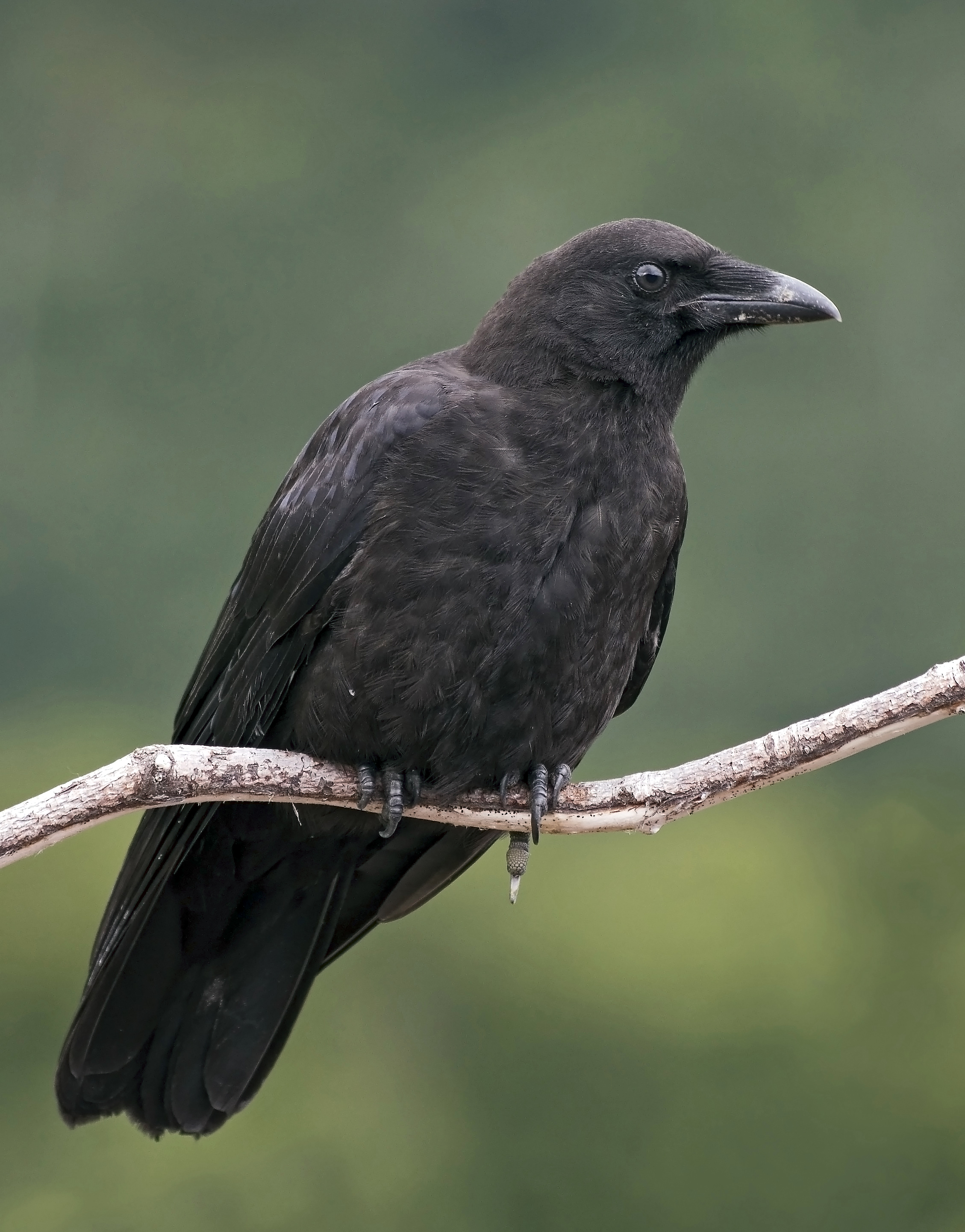
American crows, Northwest crows, and ravens


On my recent trip to Seabeck, WA, at low tide on Seabeck Bay, I spent some time in Meeting for Worship with Attention to Shore Birds. More on that wonder later, with pictures, I hope.

Some of those birds were crows; and I commented on an email list recently about how much more gregarious crows are in the Pacific Northwest of the US than they are in the Mid-Atlantic. Someone asked, Might they have been ravens?

I was pretty sure they weren't -- they didn't look enough different from crows, for one -- but this did prompt me to go do some research, especially at U Mich's Animal Diversity Web. Which, among other things, often has great recordings of bird calls.

Yes, there's a difference between the American crows I grew up with in the East, and the Northwest crows I became friends with in Seattle and visited with there and on the Kitsap Peninsula this trip. And neither of them are ravens.

Here's what I found. Enjoy!


Northwest crow:

Here's how they sound, which caused me to say, "Yep! That's them!":


American crow:


Common raven:

The Epistle from the Pacific NW Quaker Women's Theology Conference

Here is the epistle from the 8th Pacific Northwest Quaker Women's Theology Conference. Our epistle committee included Iris, Aimee , and Erin, whom we thank for their faithful work.
To our Quaker family,

Surrounded by the waters and wildlife of Hood Canal and the snowy peaks of the Olympic Mountains, sixty women gathered in Seabeck, Washington from June 16-20, 2010 for the eighth Pacific Northwest Quaker Women’s Theology Conference. Begun fifteen years ago to promote dialogue and build relationships among different Quaker traditions, this conference continues to be deeply Spirit led and enriches the lives of women who attend.

Though we represent different backgrounds and branches of Quakerism, the lines between these seemed very thin and blurred. No one avoided talking about her home meeting or church, but our membership didn’t have as much weight as our personal experiences shared in love. Even as we attempted to be open and accepting, at times we misstepped and unintentionally hurt each other. Many of us felt broken open and left this conference changed.

Through reflection papers we wrote, plenary sessions, home groups and discussion, we each connected personally with the theme, “Walk With Me: Mentors, Elders, and Friends.” Each plenary brought us back again and again to the awareness of the need for support and mentorship in our lives. We identified places in which we are being accompanied and are accompanying others and places where we feel the absence of that loving presence. Many of us made commitments to seek those relationships in our meetings, churches and beyond.

Despite colds, more serious illnesses and concerns for the health of loved ones, we drew strength, support, and encouragement from one another. Many think of the Women’s Conference as a reunion and newcomers found they were welcomed into the family with open arms.

In keeping with the testimony of community, we opened ourselves to another group, Interplay, also staying at the conference center. We described the kind of work that we each came to do, invited them to join us in worship, and likewise were invited to experience their ministry and we shared grace together before meals.

We celebrated the gifts of many through plenaries, workshops, singing and readings by several published authors. During one plenary session, several young adults shared personal experiences of their ministries in relation to the theme of the conference. We were thrilled to hear stories of women being supported and held sacredly in their ministry. However, we were deeply saddened to learn that some are not empowered or recognized in their ministries. We were thus reminded of the reality of sexism in the Society of Friends. Encircling the young adult women, we joined together in heartfelt prayer and were moved by its healing and supportive power. This experience deepened our worship and fellowship together. We challenged ourselves to be aware of internalized sexism, as well as the sexism in our churches and meetings, and to work toward true equality.

During business meeting on Saturday, we reaffirmed the work of this body of women and our leading to continue meeting together as an intra-faith group. We look forward to the next opportunity to join in fellowship.

Tuesday, 8 June 2010

Thinking about Summer Solstice: Shame, Pride, Strength, and Power

I was on a long train commute recently, trying to use the time to get some work done. I ended up writing in my Book of Shadows (spiritual journal) about Litha, or Summer Solstice.

Because I find That-Which-Is-Sacred in nature and the seasons, I like it when my spiritual work is in tune with the rhythm of the seasons. The Wheel of the Year is useful for this. The Sabbats -- the Solstices, when either day or night is longest; the Equinoxes, when dark and light are equal; and the cross-quarter days in between -- are convenient times for me to stop and check in with myself with respect to the seasons, and are also a convenient time to check in with the Goddess / the Gods in a more mindful, take-stock kind of way than I do most First Days.

Some of the Sabbats speak to me deeply, and were part of my life before I ever identified as a Pagan. Some of them just make a lot of sense to me emotionally and spiritually. And some make sense mentally, but not on that instinctive level. Summer Solstice, or Litha, is one of these.

Oh, Summer Solstice makes mental sense to me. It's opposite Winter Solstice, which does speak to me on a gut level. As I've lived in different parts of the country, Summer Solstice and Winter Solstice are times when I've really had an especial sense of place about where I've been living: sunrise and sunset on the longest and shortest days of the year are very different in different parts of the US. The longest day is much longer in Seattle than Philadelphia; sunset on Summer Solstice is later in Ann Arbor or at Camp Grayling than in the Mid-Atlantic; the shortest day is shorter in Seattle than in Ann Arbor than in Philadelphia.

Last year in Seattle, we threw a Summer Solstice cookout where it wasn't dark til nearly 10 pm, but it was chilly enough we were all wearing fleece and long pants in the backyard, gathered around the grill.

You get the picture.

But while Summer Solstice makes mental sense and place-sense, it has never spoken to me in my gut the way some of the other Sabbats do.

On the train, I was trying to plan this year's Summer Solstice Celebration, and not getting far. So I started writing instead.

.....

- What do I actually want to do for Summer Solstice?
- What would be faithful to my leading?
- What is my leading?
- What about my MFW notion that came to me in MFW?
- What is my leading with respect to Roses, Too! Tradition?

I have a strong leading and commitment to Feminist Witchcraft
.

I have a leading to teach it to other people, especially women
.

So what do I have to teach, and what do I have to learn, about Summer Solstice?

The Sabbats that follow this are all about harvest -- at Lammas, we ask, "What have you harvested so far this year? What do you hope to harvest yet?"

At Litha, we've often talked about fruits, pride, and first fruits.

Gay pride, queer pride, Pagan pride; Pagan pride is more associated with Mabon.

The flip side of pride for both of those is perhaps shame.

So how can Litha, with its bright, purifying (burning?) sun, chase away (burn?) shame, transform shame, into pride?

What things have we been ashamed of that are actually sources of strength, power-from-within, and pride?
  • femaleness; female gender; being women
  • our bodies
  • femininity -- characteristics stereotypical of female gender
  • being femme or being perceived as femme in a queer culture where that may be suspect or not as honored as being androgynous or soft-butch or gender-bending
  • feminism
  • being Pagan; being too, or too obviously, Pagan; being not Pagan enough
  • being spiritual/religious
  • doing "ritual"
  • doing ritual that is too plain, too down-to-earth
  • health, body, physical issues
  • cognitive and energy deficits
  • education -- high school and seminary especially
So: how to take this stuff about shame, that provokes or produces shame, and transform it into pride?

(One key is feminist analysis of shame based on oppression and powerlessness...)

Transforming shame and powerlessness into pride, strength, and power-from-within.

Burning things? Eating rainbow fruit salad? [ <--- Rainbow fruit salad has appeared at past Roses, Too! Litha potlucks where the theme was "Take pride in your fruits (all puns intended)"]

Writing them down, putting them into a cauldron [the Cauldron of Cerridwen], stirring them around, pulling them back out, reading them - ? ie, "I have been ashamed of/when ---," then, "X is a source of pride / strength / power-from-within" - ?

(What do we do with them afterwards?)

What about things like violent or destructive behavior, illness / injury / disease, addiction, etc?

Transform the statement.

"Recovery is a source of pride, strength, and power-from-within."

"The ability and willingness to take responsibility for my actions is a source of strength and power-from-within."

"My body is a source of pride, strength, and power-from-within."

"My body's ability to heal is a source of pride, strength, and power-from-within."

"Not taking crap from inferior doctors is a source of pride, strength, and power-from-within."

Etc, and more.

I was done writing then, but all this has been bubbling away in the stewpot in the back of my brain. And I'm curious to see how things will cook up for Litha.

And although I might not have consciously realized it until now, that little bit of work has borne some fruit already: I bought jeans (on sale for cheap!) yesterday that show off my belly fat.

Not something I ever would have done before.

I need your help to travel in the ministry

I am really terrible at asking for financial help for ministry. But the truth is that, as with most of us, whether we're Quakers, Pagans, or both, my ministry is not self-supporting, and that right now, I'm in a bind.

My ministry oversight committee from my Meeting encouraged me to register for the Pacific Northwest Quaker Women's Theology Conference. The Conference at that time had not received any donations toward its scholarship fund; my committee and I agreed that I would fund-raise for registration and housing ($250), and request travel assistance from the Meeting. I went ahead and booked my ticket ($423), and then found out the Meeting is out of travel assistance monies for the rest of this fiscal year! So now I need to raise all of that money -- $673 -- myself. And I have no income right now. Eeep!

(Update: The Conference now has some scholarship monies, but I do not know yet how much I might receive from them.)

So I am asking for gifts towards my travel in the ministry. I've created a separate page on this blog -- click here for full information, or see the link at the upper right-hand side of the page. If you need to give through an organization, I have details there as well.

Truly, any amount is helpful.

Another thing that will help a great deal is holding me, and the Conference, in your spiritual care.

Thank you, friends.

Thursday, 3 June 2010

Interest Group at FGC Gathering

I received word that my interest group proposal for FGC Gathering this summer has been approved. Here's the blurb (50-word limit!):

Many Theaologies, One Religion – the Gift of “Listening in Tongues”

Stasa Morgan-Appel

Unprogrammed Friends share Quaker worship and practice - and theaological diversity. How does That-Which-Is-Sacred speak to you? To the person sitting next to you in worship? (Does it?) And how do we talk about it with each other? We’ll practice “listening in tongues” and speaking tenderly and faithfully.

Wednesday, 26 May 2010

More music :)

I wanted to share two songs which haunt me regularly...

The first is Red Molly's 3-part a capella version of Susan Werner's song "May I Suggest."


The second is the Three Altos' version of member Sara Thomsen's song "Holy Angels." Even though angels are not part of my own theaology or personal mythology, I love this song. Another awesome 3-part harmony piece. Click here (or below) to play it.


Monday, 24 May 2010

Music in my head during worship

As I've mentioned before (especially in my talk about William Taber's "Four Doors to Meeting for Worship"), I often have music in my head during Meeting for Worship. Sometimes it's music that comes to me while I'm settling into worship; sometimes it's music that comes to me when I've gone deep.

There's a chant, "Meditation on Breathing," that I learned at the UUMN conference last year, from/by Sarah Dan Jones (on her website, and Singing the Journey #1009):

drone:
Breathe in
Breathe out

melody:
When I breathe in, I'll breathe in peace

When I breathe out, I'll breathe out love

descant:
When I breathe in, I'll breathe in peace
When I breathe out, I'll breathe out love

This song often comes to me when I'm settling into worship, and paying attention to my breathing. It was definitely present with me this First Day as I was struggling with some worry and stress.

Later in worship, Harry Belafonte's "Turn the World Around" was very much with me:

We come from the fire (water, mountain)
Living in the fire (water, mountain)

Go back to the fire (water, mountain)
Turn the world around...


Do you know who I am?
Do I know who you are?

See we one another clearly?
Do we know who we are?...


We come from the Spirit
Truly of the Spirit

Only can the Spirit
Turn the world around


I first learned this in Roses, Too! Coven, where it was a favorite closing song. Most of us there had first heard it a good when Harry Belafonte visited the Muppets (here and here). :) I now own a copy from "An Evening with Harry Belafonte and Friends," and listen to it and sing it often. (I love trying to sing it in consistent 5/4 time, instead of turning it into 6/8.)

This is a song that helps me ground and be renewed, be joyful, hopeful, and thankful.

A good song to come to me in the deep part of worship.

Friday, 21 May 2010

PNW Quaker Women's Theology Conference - consider donating to the scholarship fund!‏

Dear women:

You're receiving this email because you're one of the 50+ women who has registered for the 2010 conference (or because you are a particularly involved and long-time supporter of the conference), and we're writing to ask you to consider donating to the scholarship fund. As you know, our scholarships are made available from donations only, and we have received scholarship requests for the 2010 conference that we cannot meet at present.

There have already been some very generous donations to the scholarship fund, which we appreciate greatly. In fact, we have already received donations of over $400, which is over half the way to meeting our scholarship need of over $600. We are approximately $200 short right now.

Because of this remaining need, we'd like to ask each of you to consider whether you might be able to donate to provide scholarships for others who hope to attend, and to remind you that even a small donation can help, especially if many of us contribute. No amount is too small!

There are two ways you can easily donate:

1. online at our website, using a credit or debit card or a PayPal account
http://pnwquakerwomen.org/wordpress/register/scholarships
2. by sending a check to the conference treasurer

Please make checks to Hillsboro Friends Church and write 2010 Scholarship Fund in the memo line. Send the check to the address below:

Hillsboro Friends Church
c/o Alice Maurer
1100 N Meridian St. Apt. 29
Newberg, OR 97132

Thank you for considering this request! We are deeply grateful to Friends who can donate to help cover the costs of others.

Sincerely,

Ashley Wilcox and Sarah Peterson, co-clerks
on behalf of the PNWQWTC Planning Committee

Thursday, 20 May 2010

Reactions to "The Prep School Negro"

At the end of March, I went to see the movie "The Prep School Negro."

I'd wanted to see it for a while, for a couple of different reasons.

One is that I was a white charity kid at a prestigious girls' prep school.

One is that Andre Robert Lee grew up in Philadelphia, and the Philadelphia area is where I've lived most of my adult life and which I identify as home. His prep school is in "my" part of town, literally within walking distance of where I most recently lived in Philly. I used to work in the part of town where he grew up, and so did Beloved Wife.

Another is that I have found myself doing a lot of professional work around issues of poor African-Americans and education, and around issues of the "culture" of class. The movie trailer talks both about Lee's "golden ticket," and his sister's sense of losing him to another culture -- powerful stuff, with familiar echoes for me personally and professionally.

Yet another is that I'm now a Quaker, the school that Lee went to is a Quaker school, and I have this "thing" about talking about class issues in Quakerism. Class is present all the time in, and is an important part of, my experience as a Friend; I am determined to keep talking about class issues in our Religious Society; and work we do as Friends about class and race in general is not about "other people" -- it's about us, and it's about me specifically, not just my past life, but my here and now life.

So, there were lots of threads that drew me.

But most of all, what drew me was the intersection of class and race. I knew Lee's experience would have been different from mine. But I also wanted to know what might be the same.

I think I wanted to know, what might I see in Lee's experience that would help me make sense of mine?

I don't talk about my high school much. I don't feel any school pride. Until about a year and a half ago, I kept in touch with exactly one person I'd gone to high school with. I got an excellent education there, and it stood me in good stead, and I'm grateful for that. But I had a horrible time in so many ways, and in so many ways I hated it.

Some of that was about class. Some of that was about homophobia, although I didn't know it then. A lot of it was about girl-on-girl bullying.

So I had hoped that watching Lee's movie would help me figure some stuff out -- about my high school experience, about talking with Friends about class and race and education.

What did I find out?

Yes, there's a lot in this movie that resonates with my teen self. I didn't talk right, either, and I sure didn't dress/look right. I had to figure out where to sit for lunch, in a way completely different from and yet eerily similar to the way the kids of color in this movie did. I was both ashamed of and proud of my parents. I didn't know who the other kids were who might be "like me"/"community scholars." There are other things that were completely different for me, other things that were so much the same.

I realize this was already blindingly obvious, but I never realized it until I saw the PSN and talked with folks there, including Andre Robert Lee: I discovered that I'm ashamed. Ashamed that I went to a privileged prep school, and ashamed that I never fit in there. Both at the same time.

But I also discovered this movie is a lot more tender and gentle, and about a ton less bitter, than I feel about my own experience. Lee, and the other folks in PSN, are a lot more open and honest about how mixed their experience is/was. The good and the bad. Me, I try to hide both.

So what I walked away with is something one of the women there said to Lee during discussion: "We didn't talk about this [then], and this is our experience, and we need to."

We need to talk about it.

I need to talk about high school. I need to talk about being a charity kid going to a prep school. (We didn't have open euphemisms for charity kids like "community scholars"; it was a big secret if you were on financial aid, although you could certainly guess about some of us -- my family's car, for example, was a dead giveaway.) I need to talk about my class background, and about my life as a mixed-class person, and what that's like and how it plays out in my life now. I need to talk more openly about my teenage years and my high school experience.

But here's the big thing:

It's certainly occurred to me a number of times over the years to go back to my high school and talk about homophobia and the particular challenges facing LGBTQ teens.

But never once, until I saw PSN and heard folks talk there, did it occur to me to go back to my high school and talk about class.


Not once.

I mentioned this to Andre, in part because I was so shocked at myself.

Meeting and talking with Andre was like meeting a long-lost cousin in some ways. We had a brief, but really good, talk. Our experience is not the same, but there's some important stuff we share. And Andre's one of the only people I've ever talked to who I know gets it about my high school experience.

It's really, really important for white kids who went to prep schools on charity to start talking about our experiences. This is part of who we are. The good, the bad, the mixed. The stuff that was horrible. The joys we never would have had otherwise. All of the ordinary, everyday stuff that was neither here nor there.

Race and class are intertwined in US society, but they're not 100% the same. We can't expect our sisters and brothers of color to be the only ones who do the work of unpacking the class issues around this, and we can't ride their coat-tails, either. We can partner with them, and I'm pretty excited about that. And I'm thrilled that Andre thinks it's a good idea for white folks to use "The Prep School Negro" as a springboard to talk about our own experiences with our own "golden tickets."

Lee asked us a couple of things before we saw the film. One was, What did you think when you first heard the title, "The Prep School Negro"? How about now, after? Two was, the same with the content -- what did you see? Third was, what's one word that describes your reaction?

My word: Big-hearted.

If you're not sure you want to see this movie because you think it might make you too uncomfortable, I urge you to go see it. You might laugh, you might cry, you will very likely appreciate it, and I'm 90% sure your heart will be glad you went.


Click here for "The Prep School Negro" website.
Click here for "The Prep School Negro" on Facebook.

Monday, 17 May 2010

Position open: Quaker QuEST Coordinator, Seattle

QuEST Coordinator: University Friends Meeting, Seattle, seeks experienced administrator, program developer, trainer for established program providing six interns with year-long positions at local social change and service organizations. Half-time, salaried position. Quaker or active among Friends. Application deadline, June 1 for July start. Contact Personnel Committee, UFM c/o UFMeeting @ gmail dot com or call....


Program info here: http://www.scn.org/friends/quest.html

Quaker Experiential Service and Training (QuEST) is a program of University Friends Meeting in Seattle, WA (North Pacific Yearly Meeeting).

Sunday, 16 May 2010

Joys of Quakerism

I am engaged, right now, in a discernment process with Friends across several Quaker groups, in different parts of the country, whose individual members are in... six or seven states and two countries. Thus, most of our work is over email. Plus, it's mostly about money, which isn't easy for most religious groups, and Quakers are certainly no exception to awkwardness when dealing with money.

And, you know what? I am really blessed in this work, in these Friends, in being in Quaker process with them.

Friday, 14 May 2010

Speaking of animal sacrifice and discrimination...

Now, you know, if we help create a path to legal citizenship, we're going to be awash with people who sacrifice animals... via The Wild Hunt:

Frosty Wooldridge, the writer of the editorial linked above, is hardly the only person to invoke Santeria in order to scare people out of supporting a path to citizenship for the illegal immigrants already living here.


Gotta love it.

Read more here...

Wednesday, 12 May 2010

Ritual: the new animal sacrifice

Excuse me, I just need to rant for a moment. Did you know that "ritual" is the new "animal sacrifice"? Yes, really!

It used to be that the Big Assumption I got from Friends about Paganism was animal sacrifice.

When I was first doing intervisitation as a Priestess & Witch among Friends, people would sometimes ask me about animal sacrifice. I was a little surprised, somehow -- I think I expected Quakers, as a minority religion subject to stereotypes, to be a little more clueful about other minority religions subject to stereotypes -- but I was a bit naive. So, since I was used to answering questions about Paganism in other contexts as part of my work in education and outreach, and since I got that question all the time back then, I answered questions from Friends about animal sacrifice.

Later, when I came to identify as and came to be identified as a Friend, other Friends would sometimes ask me, "How do you reconcile being a Pagan with being a Quaker? I mean, isn't animal sacrifice incompatible with the Peace Testimony?"

Hmmm.

I'm sure you can imagine how that question, how that assumption, made me feel. It was infuriating and painful. Why on earth would Friends assume that a Friend, someone intimately involved with Quakerism, living her life as a Friend, would somehow be involved with a spiritual practice that involved such an apparently obvious contradiction to, oh, living one's life as a Friend?

Well, that hasn't stopped.

I think most Friends I meet these days know now that Pagans and Witches generally do not sacrifice animals (although in some traditions, under certain circumstances, sacrificing certain animals is a legitimate practice). Pagans overall, and Witches especially, have put a lot of time and energy over the last 40 years into countering that stereotype, and into helping convince people that pets and assorted wildlife are safe from us.

(I am leaving out an entire other rant about the fact that animal sacrifice is widespread in the US today, and that all of us participate in it pretty much every time we eat meat. Only it's called agribusiness. And yes, I do eat meat.)

We still joke about it in my family, though, especially when I'm prepping Quaker workshops, but with much less of an edge than ten years ago. "Is that the part where you teach them about sacrificing squirrels?," Beloved Wife asks, pointing to my outline. "Nah, I thought I'd start them off easy. So this is the part where we'll just make stew from a squirrel I sacrificed earlier. They sacrifice their own squirrels later in the week/year/etc."

In my interactions with Friends, the concern about those poor squirrels has faded, but it has been replaced by other Big Assumptions about Paganism.

The main one I'm dealing with these days (and have been for the last few years!) is this automatic, knee-jerk pairing of Paganism with ritual. As you can guess, I find this extremely frustrating. It drives me nuts that people automatically assume that if somebody is Pagan, they must do ritual.

And you know how unprogrammed Quakers feel about ritual. Ritual is fine for other people, but it's bad if you're a Quaker. (Defining words like of "rite" and "ritual" and other related words, and looking at our strong feelings about them, is another post.)

No one has been able to show me any definitive source that demonstrates the 100% correlation between being Pagan and using ritual as a spiritual practice. No one has been able to show me any definitive source that demonstrates the 100% correlation between being Christian and using wine as a spiritual practice, either.

(Or the 100% correlation between being Quaker and driving a Prius. Or the 100% correlation between being a Witch and wearing a black, pointy hat. I'm kind of bummed about those last two, because I think I'd look really cool driving a Prius while wearing a black, pointy hat, don't you?)

Why does this bother me so much?

Well, why does it bother me so much when people assume that Pagans, by definition, practice animal sacrifice? Sure, part of it is that in general, most of us find animal sacrifice repulsive, and why would I like it if people automatically assumed I do something most people find repulsive?

But that's not the only reason I get so frustrated: it's that I hate it when people make these kinds of absolute assumptions about me and "people like me," whether those assumptions are apparently harmless or not. And I find it thoroughly frustrating when people have an absolute conviction that what they think is true, regardless of actual facts that contradict what they think -- or the real, lived experience of the people involved that contradict what they think.

I've experienced this in particular as a woman, as a feminist, as a lesbian, as someone with a working-class background, and as a Witch: in ways I am a minority. It's a way of claiming the power of defining reality, and it's a privilege that folks who are part of the dominant culture have over folks who are minorities. It's a tool of oppression.

And one of the most important reasons it bothers me so much when Quakers make that assumption -- that being Pagan means, by definition, using ritual as a spiritual practice -- is because what usually comes next goes like this: since ritual, like animal sacrifice, is incompatible with Quakerism, then Paganism must be incompatible with Quakerism; and therefore, Pagans cannot be Quakers. (Ta-da!)

All those Quakers whose theaology or experience of the Divine is Pagan, who are going along living their lives and going to Meeting for Worship and clerking committee Meetings and setting up for coffee hour, whom you can't tell are Pagan -- poof! Not real Quakers. Sorry, see ya. Oh, I guess you'll have to find someone else to clerk that Meeting for Worship with Attention to Business...

In our religious society, we are fond of quoting our main founder as having said, "Let your lives speak." It's very disappointing to me to be faced, over and over, with Friends who refuse to listen to others' lives, but prefer instead the convictions in their own heads.

From my experience and training in mental health and as clergy, I know that when dealing with what seems to be the issue doesn't resolve something, it's time to look deeper, for something else that's going on that's the real issue. And there are a handful issues tangled up this knot, in addition to dominant/minority culture issues. Some of them I've already mentioned in this post:
  • the question of what we all mean when we use the word "ritual"(a question for another post)
  • believing what you think rather than what others' lived experience demonstrates as true
  • justifying discrimination
And some of the issues, I haven't mentioned explicitly, although they're part of this, too:
  • the difference between a set of spiritual or religious beliefs, and a set of spiritual or religious practices
  • fear of the rich diversity that exists in the Religious Society of Friends
  • the fallacy that naming our differences is what actually creates them -- that the differences which minorities in particular experience don't actually exist until named (usually by minorities). (Again, this is a dominant culturally privileged point of view.)
I have been thinking about all six of these for quite a while, and I hope to write more about them.

But in the meantime, I am thoroughly tired of knee-jerk assumptions, and would really appreciate it if non-Pagan Friends actually listened to Pagan Friends, used logic, and educated themselves.

End of rant.

Wednesday, 5 May 2010

Struggling with ministry: money and -- courage?

I am struggling a bit with ministry right now. The main thing, the obvious thing, is that there are a handful of events I want to travel to this summer, and I have to figure out how to find enough financial assistance and raise enough other financial support to do so. I also have to figure out if I have enough "spoons" (internal resources in the face of chronic illness) to be able to do so.

The thing that's really biting me in the butt right now about all this -- besides asking for money, which as we all know is just so much fun, and so easy -- is, in the words of Beloved Wife, putting myself out there.

I hate that.

But it's an integral part of ministry in community.

No, no, I want to say, my ministry is between me and the Goddess. It's about regular discernment, being faithful to my leadings, figuring out what I'm led to do and doing it; and if I've done it "right," other people will respond.

Except it's not. That way. Or, not only that way.

I've been wrestling for a while with how so much of my ministry is about what happens next: what happens after I've listened, been in discernment, and made a plan. Then comes talking to people. Then comes advertising an event, submitting a workshop proposal, herding cats in the workshop running the workshop, finding space for an event, etc, etc. All of these things invariably involve talking to other people about it. And not just talking to other people, but, as Beloved Wife said, putting myself out there.

Taking risks.

You know how you feel after giving ministry in Meeting for Worship -- tender? That's how I feel about my ministry work. That's how I feel about a particular effort in the ministry when it first comes to me, and that's how I feel about it even when it looks like the ball is rolling along well. Even when my Oversight Committee helps me refine something and tells me, "Run with it!," even after I get the workshop or interest group approval, I feel tender, and this weird combination of certain and uncertain. Hurrah, I did it! We're ready to go, goes hand-in-hand with, What if no one else responds? What if no one comes?

When I first moved to Seattle and became more active in my ministry, I asked myself that often about events I was hosting: What if no one comes? And although it was painful, I realized it didn't matter: what mattered was that I was there, fully present and open-hearted, holding space, so that people could come.

How do I translate that into the travel I feel led to do in the ministry this summer? How do I translate that into putting myself out there, and asking for money?

If I had enough money, it wouldn't matter whether or not other people think it's part of my ministry for me to go to, say, the Pacific Northwest Quaker Women's Theology Conference, or whether other people think it's important for me to go. I could just pay my registration and book a plane ticket. But because I plain can't go on my own financial resources, I have to ask for help. And this means putting myself out there, means taking the risk that other people won't think it's as important as I do.

This is part of the price ministry demands of those of us who don't have enough money to support it financially ourselves.

We must take that risk more often of asking if other people believe in the value of what we're doing.

And that's hard.

What travel do I want to do in the ministry this summer? (It's scary to write this part!)


I also really want to go Cherry Hill Seminary's Summer Intensive, but I know I don't have enough spoons right now for the classroom work beforehand and afterward.

I feel pretty sure that I will get the financial aid I need to go to FGC Gathering and to NPYM. I've been to those before; how to put together enough financial aid is nicely laid-out and well-established, both in general and for me.

Couple Enrichment Leader Training, and the PNWQWTC -- which, of course, happen first -- I'm feeling some angst over how to make happen financially.

Argh! Did I mention this is hard?

Thursday, 29 April 2010

A Passionate and Determined Quest for Adequacy: Becoming Whole

from A Passionate and Determined Quest for Adequacy: Becoming Whole:

At the Quaker Women's Theology Conference, we encourage women to use narrative theology, that is, to tell their own stories of how God is at work in each person's life. I think sometimes we are afraid of talking about God because we fear that our experiences do not match. But it makes a lot of sense to me that we would all have different experiences of knowing God. I think God is like a mutual friend. For example, I know Sarah, and Sarah's husband knows Sarah, and you may know Sarah, but we would never expect to all know the same things about Sarah. Narrative theology allows us to recognize God in another person's story, even if that person uses very different language.


Read more here...

Monday, 26 April 2010

What do you want to know about Pagan Quakers?

I am curious, and I have a question for Friends -- especially in the unprogrammed tradition, but also in other traditions.

If someone offered a two-hour session about Pagan Quakers, say at a larger Quaker event like FGC Gathering or Yearly Meeting, what would you want to know? What would you want the session to include?

Tuesday, 20 April 2010

A quintessential Pagan Quaker ritual - ?

I had a question recently from someone about what a quintessential Pagan Quaker or Quaker Pagan ritual might look like.

A few days later, in passing, I happened to mention on Facebook that I'm doing Beltane planning, and a friend said she'd love to see a Quaker Pagan ritual, thinking that's what said Beltane ritual would be. I told her that Beltane with Roses, Too! is not a Pagan Quaker ritual, but a Pagan ritual with Quaker and lots of other influences.

At first I suggested Full Moon Meeting for Worship/Worship-Sharing might be a better example of a Pagan Quaker ritual, but then I realized -- you can't actually tell the difference, by looking or even necessarily from within worship, between that and any other Meeting for Worship.

Okay, so what would be a quintessential Quaker Pagan ritual?

Well, what do I mean by quintessential? It occurred to me that this is another one of those words I use frequently and whose meaning I'm pretty sure I know from context, but I decided to look it up. I found the Merriam-Webster definition particularly interesting, because it talks about "the fifth and highest element in ancient and medieval philosophy that permeates all nature." (Hmmm!) But in this case, I am using quintessential to mean "the most typical example or representative," or perhaps, a typical example or representative.

Let me also think and talk for a minute about what I mean by ritual.

I spent a lot of my time last spring thinking and writing about what ritual actually is, for a couple of reasons. One reason was that I was taking a graduate class called "Understanding the Ritual Experience." (It ended up being more of an introduction to ritual theory and ritual studies than the nice and concrete unpacking of the experience of ritual which I'd been hoping for; nonetheless, it was deeply fascinating, and I learned a lot. The prof has since re-vamped the course; I'm not sure what it would be like now.) Another reason was that I'd spent a lot of time -- too much time? -- the fall before, trying to be in dialogue with the clerk of the pastoral care/oversight/ministry-and-counsel-equivalent committee of one of my former Meetings, about the definitions of words like ritual, clergy, and Pagan... conversations which, sadly, ended up coming down to: what he thought, he considered to be truth, and was reporting to the Meeting as such; and any reality of experience -- mine, that of any other Pagan Quakers, of any other non-Christian Quakers, of any other Pagans, or of the large body of Pagans in the world -- was just not true as far as he was concerned. It was painful, to say the least.

Since I'm not going to re-hash my whole semester (or the fall before) here, for now, I will just say that people who study religion and religious practice would call Meeting for Worship the essential/quintessential religious ritual within unprogrammed Quakerism.

(Yes, yes, I know unprogrammed Quakers say we don't have ritual, and we like to think that's true. But that is a whole entire other conversation.)

So, thinking about it, and going back to what I said above, I take it back: I would say that any Meeting for Worship in which people with Pagan theaology participate is a quintessentially Pagan Quaker ritual.

I'd also say that any Meeting for Worship in which people with Christian theology participate is a quintessentially Christian Quaker ritual. Certainly any Meeting for Worship which focuses primarily or exclusively on Jesus or Christ would be a Christian Quaker ritual.

So any Meeting for Worship that focuses primarily on the Old Gods, the Goddess, nature as the Divine Itself (rather than as Divine creation), etc., would be a quintessential Pagan Quaker ritual.

Happily, most Meetings for Worship which I attend aren't explicitly Christian, or Pagan, or anything else: whatever Face of the Spirit you experience or seek, you are welcome. The people in most Meetings I've been part of worry a lot less about which particular aspect, facet, or name of the Divine people seek and experience -- or, to borrow a phrase from Cat Chapin-Bishop, which brand name of the Divine people tune into -- and are more concerned about our seeking together and collective experience. This is how I can be in worship with Friends who are Christian, Jewish, Non-Theist, Buddhist, and other theaologies, and still be in genuine spiritual community. And even have the profound experience of gathered or covered/held worship. (And what a blessing. What a deep, joyful blessing.)

In that earlier conversation, I went on to lay out what I thought a typical or quintessential Quaker Witchen or Witchy Quaker ritual would look like. And then I realized, I'm a Pagan Quaker; I'm an open and out Pagan Quaker who does education with Monthly Meetings and Quaker organizations, and with Pagan organizations; but somehow, I never end up doing this version of worship/ritual -- what's up with that, anyway? *laugh*

So here's an example of a Pagan Quaker ritual based in Roses, Too! tradition of eclectic, Feminist Witchcraft (therefore, small-group):

  • Gather; talk through the ritual.
  • Check-ins: what are three words that describe how you are right now?
  • Ground and center/tree of life.
  • Purify the space, cast the circle, invoke the directions and the Goddess.
  • Silent worship. Vocal ministry as moved. Singing, dancing, drumming, chanting if moved?
  • Ground and center.
  • Feasting.
  • Goodbyes to the directions and the Goddess and to each other. Shaking of hands. Hugs.
Here's another I can easily envision:
  • Settle into silent worship; "enter and center" (per Bill Taber) / ground and center in silent worship.
  • If/as led: purify the circle.
  • If/as led: cast circle.
  • If/as led: invoke the directions.
  • If/as led: invoke the Goddess.
  • More silent worship.
  • If/as led: raise power silently or noisily, with or without movement.
  • Ground and center.
  • If/as led, goodbyes to the directions and the Goddess.
  • Shaking of hands/goodbyes to each other.
  • Feasting/coffee and tea in the social hall after. ;-)
And I'm curious. What does Quaker Pagan / Pagan Quaker worship, ritual, etc., look like to you? What's your own experience of it?

PALESTINE: CPT-Palestine endorses Boycott, Divestment and Sanctions Movement

Wow. - sm

CPTnet
19 April 2010
PALESTINE: CPT-Palestine endorses Boycott, Divestment and Sanctions Movement

CPT-Palestine has decided to endorse formally the Boycott, Divestment and Sanctions (BDS) movement, as called for by Palestinian NGOs, because sixty years of negotiations and diplomacy have only enabled Israel to solidify its military occupation of Palestine. The international community has long called for Palestinian society to resist the violence of the Occupation nonviolently, so we, as members of an international peace organization, believe that when Palestinians mount nonviolent campaigns against the Occupation, we are morally obligated to support them.

We affirm the words of Palestinian Christian leaders in their Kairos Document: "These advocacy campaigns must be carried out with courage, openly and sincerely proclaiming that their object is not revenge but rather to put an end to the existing evil, liberating both the perpetrators and the victims of injustice. The aim is to free both peoples from extremist positions of the different Israeli governments, bringing both to justice and reconciliation. In this spirit and with this dedication we will eventually reach the longed-for resolution to our problems, as indeed happened in South Africa and with many other liberation movements in the world.

We recommend that members of our constituency review the following resources, so they can better understand the context from which the BDS movement has arisen:

1) The Kairos Palestine Document, "A moment of truth: A word of faith, hope and love from the heart of Palestinian suffering."

The document is available as a PDF file in seven languages at http://www.kairospalestine.ps/?q=node/2 and at http://www.oikoumene.org/gr/resources/documents/other-ecumenical-bodies/kairos-palestine-document.html

2) "Palestinian Civil Society Calls for Boycott, Divestment and Sanctions against Israel Until it Complies with International Law and Universal Principles of Human Rights 9 July 2005": http://www.bdsmovement.net/?q=node/52

3) "Who Profits from the Occupation?" http://www.whoprofits.org/

4) A 2009 report by a fact-finding committee of South African social scientists, which notes that "three pillars of apartheid in South Africa" are all practiced by Israel in the Occupied Territories: demarcating people into racial groups and allotting superior rights, privileges and services to the dominant racial group; segregating people into different geographic areas and restricting their movements, and suppressing any opposition to the regime using administrative detention, torture, censorship, banning, and assassination." http://www.hsrc.ac.za/Media_Release-378.phtml#

5) Dr. Neve Gordon's reflection, "Boycott Israel: An Israeli comes to the painful conclusion that it's the only way to save his country," http://articles.latimes.com/2009/aug/20/opinion /oe-gordon20.

See also "Palestinians, Jews, citizens of Israel, join the Palestinian call for a BDS campaign against Israel and video clip by Israeli-American rap artist, Invincible, in support of the BDS movement: http://www.youtube.com/watch?v=MepX0PcjzfA

After Gordon's piece appeared in the Los Angeles Times, he nearly lost his job at Ben Gurion University. See the critique of Gordon's position by famed peace and human rights activist Uri Avnery: http://zope.gush-shalom.org/home/en/channels/avnery/1251547904 (which contains Archbishop Tutu's thoughts on the efficacy of boycotts)


and subsequent critiques of Avnery's position by South African Ran Greenstein ("I agree more with Gordon than Avnery"): http://gush-shalom.org.toibillboard.info/RanGreen.htm

Abraham Simhony http://zope.gush-shalom.org/home/en/channels/archive/1251974606/


and Alternative Information Center director, Michel Warschawsky "Yes to BDS!" http://www.internationalviewpoint.org/spip.php?article1733

Friday, 2 April 2010

"I just can't imagine": a Holy Thursday reflection on inconsolable grief

In the fall of 2008, my friend Michelle wrote a column in her local Catholic paper about inconsolable grief -- her own experience with it; a friend's experience with it -- and about the different ways we as human beings respond to other people's grief.

In reaction, I found myself writing about loss and grief and support. About Michelle's loss, about her friend's loss, about loss in my own life. About how I'd responded 20-odd years ago to Michelle's grief, how being there for her in little ways helped me six months later when my own life fell apart, how I responded when we got back in touch, how I hoped I'd respond differently now. About why people react in the ways that we do to other people's grief and loss. About what was helpful and not helpful to me when my life fell apart and while I was putting it back together, and during times since when I've been facing hard things and needing support.

I knew I was writing something that needed to become a blog post, but it never quite made it there; it kept waiting in the wings. Several things seem to be bringing it out today... A discussion with my friend Denise about the nature of bravery: about being labeled "brave" by people around you when you're just doing your best to keep putting one foot in front of another; about being labeled "brave" when what you really are is quietly desperate... That Holy Thursday is the anniversary of the day Michelle's husband died... A set of discussions with pastoral care colleagues at Cherry Hill, about helpful and unhelpful things to say to people who are grieving, and unhelpful things that other clergy members, well-intentioned but clueless, have said to us.

In her column "The Psalms Are in Our Bones," Michelle wrote:

A friend lost her son last week, dragged from a long awaited retreat in silence into a maelstrom of pain. Over and over people told her that they could not imagine her grief. Perhaps what we really meant was that we did not want to experience her grief ourselves.

I kept coming back to that phrase: "I can't imagine."

Another friend, also an academic, had recently gone through the death of a spouse, so that was fresh in my mind and heart. Over the years, I had supported a number of friends and colleagues through the deaths of spouses, also usually sudden and unexpected; I was holding each of those in my heart.

And I often heard that phrase in the wakes of those deaths: "I can't imagine." "I can't imagine your loss." "I can't imagine how you're feeling." "I can't imagine how you're coping."

I've certainly said it; I hope I haven't said it in a long time, not since I was younger, less experienced (more stupid?), and more awkward.

Michelle's friend pointed out in her own blog, quite bluntly, that when people told her that, it was not helpful. Not remotely.

So, why do we say it?

Michelle theorized that when we say "I can't imagine," we are saying we don't want to experience that person's grief ourselves.

And I couldn't help thinking, it's not that we can't or don't want to imagine the loss ourselves -- because we can't help imagining it. We imagine how we would react in the exact same situation -- and perhaps that's where our imaginations fail.

We can imagine being in the same situation -- the death of a husband, wife, partner, son, daughter -- but perhaps what we can't imagine is how we would cope.

When people have told me things like, "I can't imagine," or "You're so brave," it hasn't been helpful. When I was coping with the hell of putting my life back together after trauma -- coping with the hell of the aftereffects of sexual assault and abuse, child abuse, and domestic violence -- I wasn't being brave: I was simply, quietly desperate. My choices were, literally, "Face this" and "Die." To me that wasn't a choice. A number of people have tried to tell me it was, that I chose to live and to heal rather than to die and that that was brave; but it just doesn't feel that way to me. During that time, when people told me things like "I can't imagine" and "You're so brave" (and they did), it felt to me that they were putting distance between us. They were saying, I can't be you; I can't even imagine being you. And it wasn't helpful. I didn't need people to be just like me, but I did need connection.

So, what is helpful?
  • Being present. Michelle wrote: "My mother held me, repeating over and over again that she knew there was nothing she could to take away the pain, but that she would be with me."
  • Being willing to hear how it is without running away. (After all, the person who's hurting can't run away; they have to live with it.)
  • Listening.
  • Being willing, being able, to be with, without trying to fix it, or make it go away, or (insert platitude here).
  • Bearing witness. I learned a lot about bearing witness from two people in particular throughout my 20s: Mona and Nif. Mona was my therapist; Nif, my best friend. Neither could "fix" anything. But they could, and did, bear witness. They could be there with me while I went through it. And they, along with the women in my sexual assault and sexual abuse survivors' groups, taught me to bear witness.
I know the phrase "bearing witness" is charged, but that's what this is; and it is sacred work.

All these things are about connection and being present with each other. Real connection with each other; being truly present with each other, just as we are, where we are.

Along with other trauma recovery experts, Quaker healer John Calvi talks about how one of the things trauma does is separates us from community, and about how healing from trauma necessarily involves reconnection or creating new connections. We also know that further isolation from community after trauma hinders recovery.

What John talks about, what Michelle's mother did for her, what Michelle did for me, what Mona and Nif did for me, is affirming connection. Affirming sacred connection. And that honors That-Which-Is-Sacred in each of us.

Michelle continued: "The psalms don't necessarily bring comfort or ease in grief, but like my mother, everyone who prays them, is with me, and with each other. Can we be with others in their inconsolable grief?"

Can we?

I think we can, we do, and we must.

This brings to mind the chorus of the song "Stone Circles":

and everything I do
touches you
and everything I am
you hold in your hand

and it seems to me that we are standing stones
there's no way that we can ever be on our own
and even if at times it seems that we are all alone
we're in stone circles marking time
with standing stones


(c) Anne Lister, "Stone Circles." Recorded by Anne Lister and Anonyma on Burnt Feathers, and by Sound Circle Women's A Capella Ensemble on Sound Circle. (See related post here.)

Also, I did consult with Michelle before I posted this piece.

A few queries...

From Faith and Practice of North Pacific Yearly Meeting, printed in my Meeting's weekly announcements:

Are we prepared to let go of our individual desires and let the Holy Spirit lead us to unity? Are we charitable with each other? How careful are we of the reputation of others? Do we avoid hurtful criticism and gossip?

Thursday, 1 April 2010

Invisibility: life, death, and reporting

A friend of mine, someone I care about, posted these three links about an apparent murder in Queens, two from the NY Times and one from the NY Daily News, to her Facebook Wall. Stunned discussion ensued.

I don't have anything terribly insightful or articulate to say about this. I am appalled. I expected better of the NY Times, but as one person pointed out, the NYT may have simply pulled the report off the police blotter, and they certainly posted a correction.

But, still. Argh, argh, argh.

The incredible disconnect between the first article and the other two. The disconnect between the reality of the person living her life and the perception of the world around her. The incredible, double invisibility.

I am sick and tired of being told the very reality of my actual experience doesn't exist because it doesn't match the pre-conceptions of reality other people, especially people in positions of power over me, hold. And I'm cis-gendered; I have that privilege. This dehumanization of a trans sister is appalling.

And it's not like it's new.

I am so, so sorry.

Man, 29, Found Stabbed to Death at Home in Queens

Transgender woman Amanda Gonzalez-Andujar found dead, naked in ransacked apartment

Detectives Investigate Killing of Woman in Queens